Pharmaceutical Packaging for DTC GLP-1 Kits: Make the Box Do the Pharmacist's Job
Posted by Oliver Inc. on 27th Oct 2026
GLP-1 brands that sell direct to consumers now ask their pharmaceutical packaging to do a job a pharmacist used to do. No one stands at a counter to show a first-time patient how to draw a dose, where to keep the vial, or which side effects to expect in week one. The box arrives, the patient opens it at the kitchen table, and the printed pieces inside carry the whole conversation. Demand keeps climbing. A Gallup poll released in July 2026 found that 11% of U.S. adults currently take a GLP-1 for weight loss, up from 3% in 2024. Every patient who starts treatment through a website needs a kit that teaches, stays compliant, and holds up without a pharmacist in the room.
Give Pharmaceutical Packaging the Pharmacist's Job
At a retail pharmacy, a pharmacist checks the prescription, hands over the medicine, and answers questions. In the DTC model, a telehealth clinician writes the prescription, a partner pharmacy fills it, and a courier leaves a cold box at the door. Your pharmaceutical packaging has to cover the counseling step that dropped out.
Vials make the job harder. LillyDirect sells Zepbound single-dose vials to self-pay patients, and those patients have to buy a needle and syringe to use them. Patients draw the medicine from the vial and inject themselves, which takes more skill than clicking an autoinjector pen. The FDA urged health care providers to help patients pick the right syringe size and teach them how to measure a dose. In a DTC order, the printed kit does much of that teaching.
Health literacy raises the stakes. Only 12% of U.S. adults have proficient health literacy, and many adults have trouble understanding a drug label. A dense folded leaflet won't get most first-time patients through their first injection.
Build Pharmaceutical Packaging Inserts Around the First Dose
An onboarding kit turns one shipment into a guided first week. The patient should be able to pick up one card, finish one task, and set it down. For DTC pharmaceutical packaging, we recommend four printed pieces, each with one job:
- Step-by-step injection card. Numbered illustrations for each step: wash your hands, check the vial, draw the dose, inject, and dispose of the needle. Add a QR code that opens a short injection video.
- Titration calendar. A week-by-week dose schedule the patient can mark, since patients usually raise GLP-1 doses gradually to ease side effects.
- Storage reminder. One rule in large type: refrigerate at 36°F to 46°F, and keep single-dose pens or vials out of the fridge for no more than 21 days at up to 86°F.
- What-to-expect insert. Common side effects in the first weeks, when to call the clinician, and how to reach support.
Place the storage card on top so the patient reads it first. Print the pharmacy's support line on every card, not only the welcome letter. Many telehealth brands ship in plain outer boxes with no branding that identifies the contents, so the inner carton and inserts carry all of the communication. Keep the shipper plain and put your design effort inside the box.
Keep Every Printed Piece Within Drug Packaging Regulations
FDA rules on misleading claims cover the printed pieces in the box as well as the website. In February 2026, the FDA stated that companies can't claim a compounded GLP-1 is a generic version of an approved drug, uses the same active ingredient, or is clinically proven to work. Warning letters the agency made public in March also targeted private label branding that hides which pharmacy compounds the product. Run every insert and welcome card through the same regulatory review as your web copy, and keep a version log so each printed piece matches the approved file.
Counterfeiters copy print, too. During its counterfeit Ozempic investigation, the FDA confirmed fake pen labels, patient information, and cartons. Crisp registration, consistent color, and tamper-evident packaging such as perforated seals and void labels give patients a way to spot a fake. We explain how those protective features fit into pharmaceutical packaging in our post on how packaging protects the drug itself.
Pharmaceutical serialization adds another checkpoint. DSCSA requires package-level tracing of prescription drugs, and the FDA gave small dispensers until November 27, 2027 to meet the final electronic data exchange requirements. Design sleeves and inserts so they never cover the manufacturer's serialized barcode.
Pick a print partner with documented quality systems. Oliver, for example, holds ISO 9001 certification and G7 color credentials and offers anti-counterfeiting measures, which is the standard to look for when every insert has to match an approved proof.
Plan DTC Kits for PPWR and Recyclable Materials
Sustainable pharma packaging now carries legal weight in Europe. The EU's Packaging and Packaging Waste Regulation has applied to healthcare packaging since August 12, 2026. Packaging that touches the medicine is exempt from the recyclability and recycled content rules, and an outer carton qualifies only when it protects the medicine's quality. A kit box, a sleeve, and a shipper don't touch the drug. PPWR covers all packaging placed on the EU market, so if your kits ship into Europe, build those pieces from recyclable paperboard and size them to the contents.
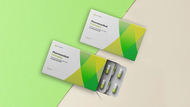
Oral GLP-1s bring blisters into the DTC box. Regulators approved oral GLP-1 formulations in late 2025 and early 2026, and some of them don't need refrigeration. Your pharmaceutical packaging for tablets can use recyclable mono-material blisters. Bayer adopted a mono-material PP blister for its antacid Talcid, and ACG launched a high-barrier PP blister at CPHI 2026. AstraZeneca plans to launch products in PP blister packs from 2027. Paperboard blister cards also cut plastic in the secondary layer.
Injectables still need cold chain packaging built to the same standard as packaging for biologics. Cold chain suppliers serving specialty pharmacies point to smaller, lighter designs and right-sized refrigerant loads that lower freight costs and material use. If your team is setting targets for 2027, our post on meeting sustainable packaging goals covers material choices in more detail.
Test Your Pharmaceutical Packaging With a First-Time Patient
Before a full print run, hand a prototype kit to someone who has never injected a medication. Watch where they stop, what they reread, and which card they skip. Reorder the pieces, raise the type size where they hesitate, and move the storage rule to the first thing they see. Then check every printed claim against FDA guidance and, for European shipments, the PPWR rules. A kit that passes both checks does the pharmacist's job at the kitchen table, and that's the standard to hold your pharmaceutical packaging to.